What is a DEXA scan?
Simply put, it's widely accepted as the gold standard for measuring visceral fat, lean muscle, and bone mass. DEXA stands for Dual-Energy X-ray Absorptiometry. It's a low-dose imaging technology that sends two precisely calibrated X-ray beams through your body. Because bone, muscle, and fat absorb these beams differently, the scanner can distinguish between them.
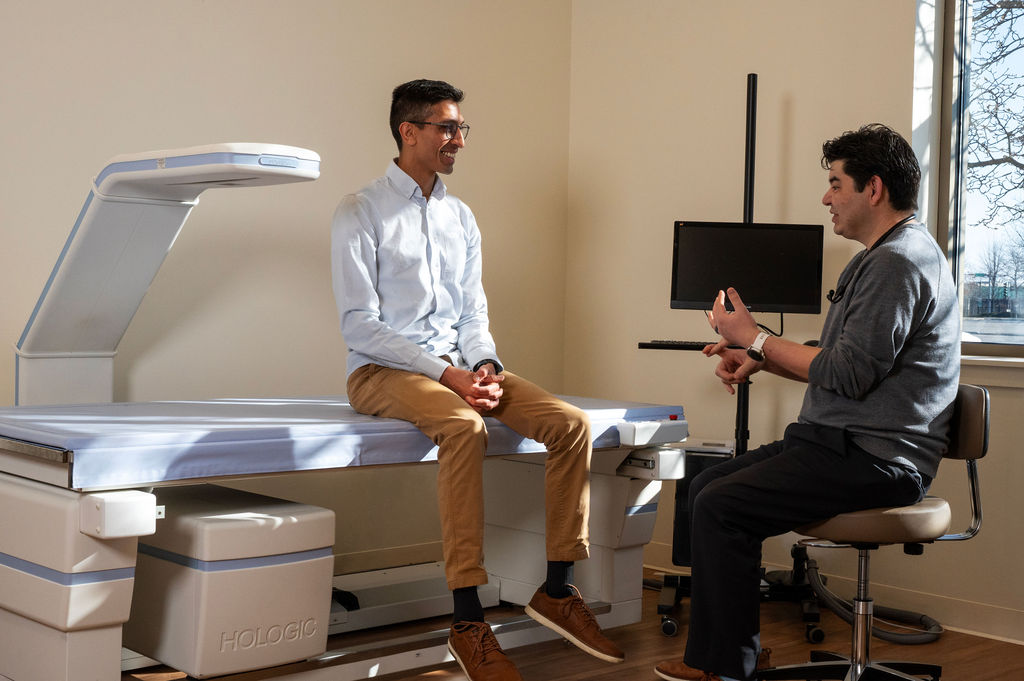
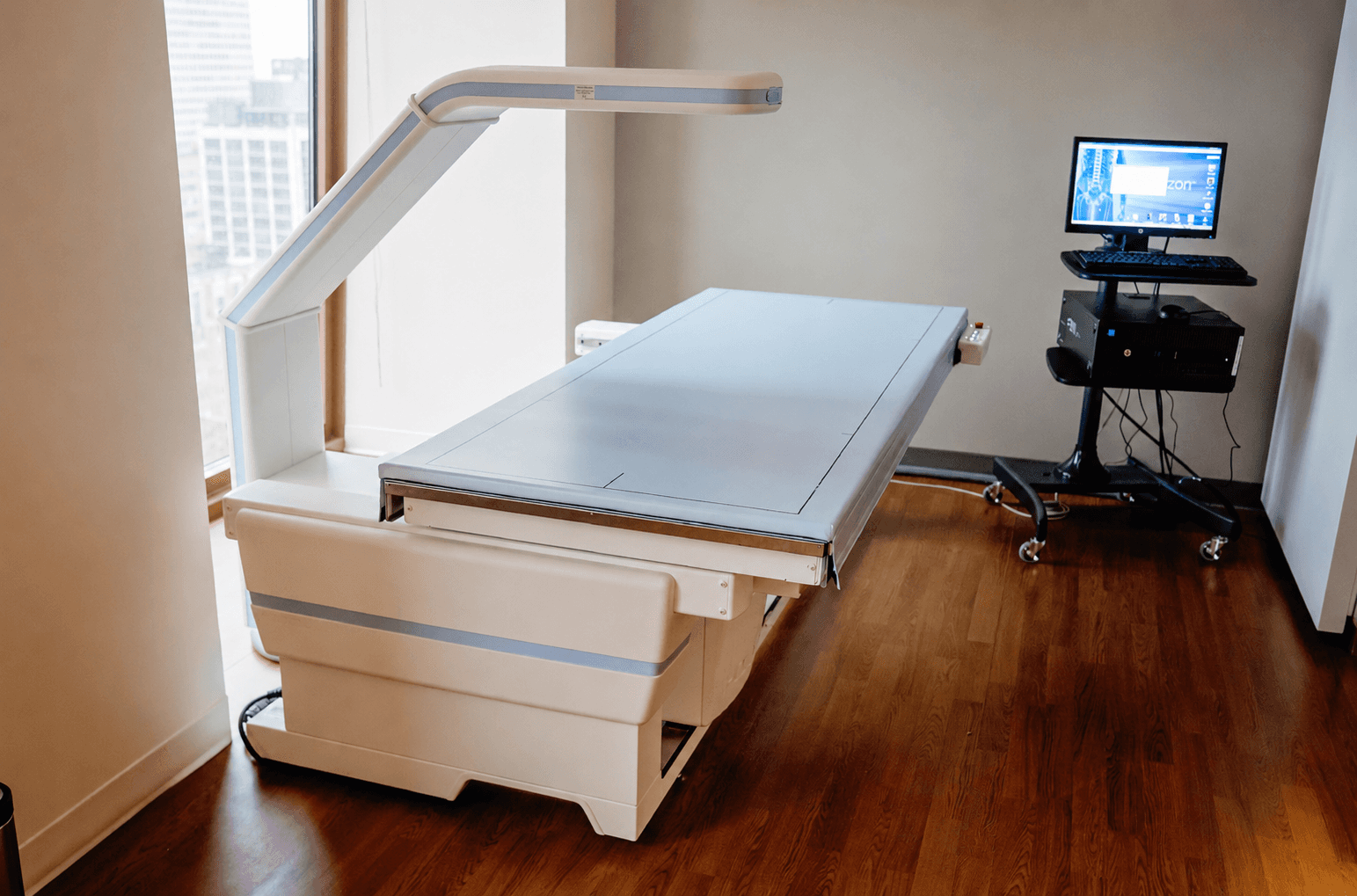
Originally developed for diagnosing osteoporosis, DEXA has become the gold standard for body composition testing. At Harper Health, we use the Wide Logic DEXA machine — a clinical-grade system that delivers detailed, reproducible results in minutes.
The procedure is entirely non-invasive and painless. You simply lie still on a padded table while the scanner arm passes slowly overhead. There's no enclosed tunnel, no injections, and no discomfort. The radiation dose is extremely low; less than you'd receive on a typical day from normal background environmental radiation.
What your report measures
Your body composition report breaks your body down into its components, with regional breakdowns showing how each is distributed across your arms, legs, and core. Here's what each measurement means for your health.
Body Fat %
Your total fat mass as a percentage of body weight, with a breakdown of where that fat is stored across each region.
Lean Muscle Mass
The total weight of muscle and other lean tissue in your body, measured by region, including each individual limb.
Bone Mass
A measure of the bone tissue that makes up your body, helping provide a more complete picture of your overall composition.
Visceral Fat
The amount of fat stored around your internal organs. This is a stronger predictor of the risk of metabolic disease than overall body fat percentage.
Segmental Analysis
Left vs. right comparisons for both muscle and fat, helping identify imbalances that may affect performance or injury risk.
Population Benchmarks
Your results are compared against validated national databases, showing where you stand relative to your age and sex group.
Beyond BMI
Body Mass Index is calculated from just two numbers: height and weight. It can't distinguish between a pound of muscle and a pound of fat, and it tells you nothing about where fat is stored or how your body is actually built. A body composition scan gives you a clearer picture of your health.
DEXA SCAN
The amount of fat, muscle, and bone independently
Identifies visceral (organ) fat specifically
Detects muscle imbalances
Regional breakdowns for arms, legs, and core
BMI ONLY
General guidance based on weight and height
Cannot distinguish muscle from fat
Fat distribution based on what you see
No bone health information
What happens during a scan?
The test is simple and takes less than 15 minutes from start to finish. Here's what the experience looks like.
01
Quick intake
02
The scan
03
Your report
04
Results review
How to prepare
A few simple steps will ensure your results are as accurate as possible.
Hydrate
Go about your day as usual. Arriving well-hydrated gives your body its natural tissue composition and keeps lean mass readings accurate.
Eat normally
There's no fasting required. A light meal 2–3 hours before works well. We want to measure your body at its everyday baseline.
Dress comfortably
Wear something light and simple: gym clothes, leggings, a T-shirt. You'll stay fully clothed for the scan, so whatever you can lie flat in comfortably is perfect.
Skip calcium supplements
If you take calcium supplements or antacids regularly, skip them the day of your scan. They can show up in bone density readings and skew the results.
Rest before
A relaxed morning before your scan gives your muscles a chance to settle into their resting state, which produces the most consistent, comparable readings.
Bring past results
Have you had a DEXA scan before? Bring your previous report. We can review it to help identify general trends in your body composition over time.